Four Square Laundry
Say NothingFour Square Laundry was both a genuine neighbourhood service and the centrepiece of a British intelligence operation in Belfast. Its weekly collections made it familiar to residents, while the laundry van and the handling of customers’ clothes gave British authorities opportunities to gather information. In autumn 1972, the Provisional IRA attacked the network in a coordinated operation: undercover driver Ted Stuart was killed, his partner Sarah Jane Warke escaped, and two other locations were hit. The episode turned an unremarkable domestic service into a battleground over who could observe, classify and act upon life inside Belfast’s homes.
A familiar service with a hidden function
Four Square Laundry operated in the Twinbrook estate, on the outskirts of Belfast, where shops were scarce and door-to-door traders were common. Its weekly routine was simple: Sarah Jane Warke collected dirty clothes from households and returned them several days later, clean and neatly folded. The prices were cut-rate, and residents liked both the service and Warke, whom the account describes as ingratiating. Ted Stuart, the young driver, was similarly well liked; children on the estate called him Teddy. The van belonged in the neighbourhood precisely because its work did.
The service’s apparent ordinariness concealed a more intrusive purpose. Laundry was not merely a pretext for visiting homes: the clothes themselves became material for intelligence gathering. Before garments reached the industrial laundry that handled the washing, British authorities examined them for traces of explosives. Analysts could also compare the clothes collected at an address with the number, age and gender of the people believed to live there. A mismatch might suggest that the property was being used as an arms drop or a call house. The routine movement of household linen thus provided a way to inspect domestic life without making every visit look like a military search.
Surveillance built into the van and the laundry chain
The collection network joined several forms of surveillance. Four Square Laundry had an office in Belfast city centre, and its household rounds generated information about particular residences. The van itself had been specially adapted: its hollow roof could conceal a soldier, who took photographs of people and houses through a hidden opening. A vehicle residents knew as part of the weekly routine could therefore carry a watcher above them as it travelled through the estate.
The laundry scheme was part of a wider Mobile Reaction Force network, not an isolated trick. British intelligence also operated a massage parlour above a house on the Antrim Road, where a talkative masseuse could encourage customers to disclose information. The laundry service and the parlour used different forms of ordinary contact—collecting clothes and making conversation—to draw intelligence out of everyday settings. The network’s strength lay in that ordinary appearance; its exposure meant that the same routine could become evidence of surveillance.
Exposure and the coordinated attacks
Brendan Hughes learned about the laundry operation through Seamus Wright and Kevin McKee, men he had decided to use as triple agents rather than execute. They were instructed to give their British handlers low-level information or misinformation, and to gather intelligence for the Provisional IRA. Hughes told them that success could earn them immunity for their original offence. Their accounts revealed the scale of the British network, including the laundry service, its city-centre office and the massage parlour.
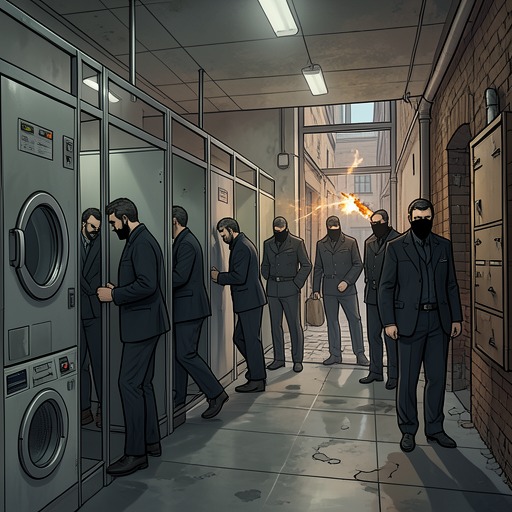
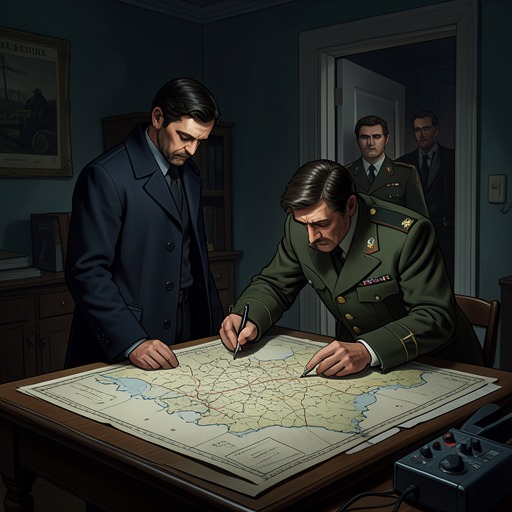
Hughes wanted to strike as soon as he learned what the service was doing. Gerry Adams urged him to wait and gather more intelligence. The delay served a practical purpose: attacking one site would warn the operators that the network had been exposed. By early October, the republican team believed it had enough information to act against the locations nearly at once. Three strikes were planned—the van, the office and the massage parlour—with the aim of disabling the apparatus within an hour. The operation depended not on a single dramatic raid but on coordination: each target had to be hit before an attack elsewhere could alert it.
The attack and its aftermath
On an autumn day in 1972, Warke had left the van and was speaking with a housewife in Twinbrook when two gunmen appeared and fired at the driver’s side. Stuart, an undercover British sapper serving with the Royal Engineers, died almost instantly. When the gunmen turned towards her, Warke fled into the house, drew the woman and her children inside, and said the shooting must be a loyalist ambush. The woman helped her escape through the back door. The familiar service had become, in seconds, a deadly scene witnessed from a neighbour’s doorway.
The attackers had also been ordered to fire into the van’s ceiling, where a concealed soldier might be hiding. They did not do so; whether anyone was concealed there is left uncertain. Elsewhere, teams shot up the office and the massage parlour, but hit no other members of the Mobile Reaction Force. The raids nevertheless marked a major victory for the Provisional IRA. Hughes was proud of their execution, and Adams later characterized the operation as a devastating blow to the British.
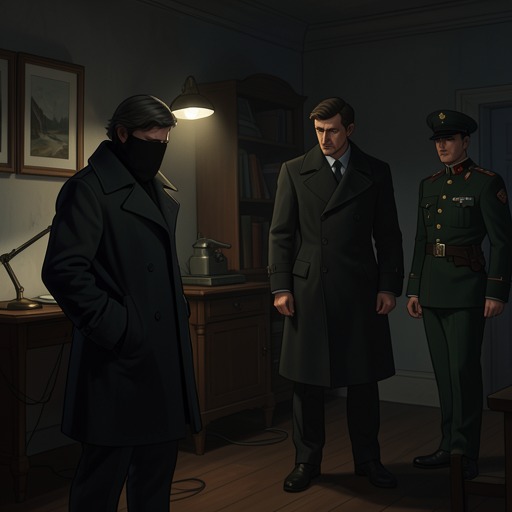
The operation’s success left a further question: what would happen to Wright and McKee, whose intelligence had helped expose the network? On the day of the attacks, Wright told his wife, Kathleen, that he had to be careful because he had signed papers concerning the Official Secrets Act. That night he left with a man who arrived by car and disappeared. The IRA denied taking him, and the army denied involvement; McKee vanished around the same time. Their fate made the intelligence breakthrough inseparable from the danger faced by the men who had supplied it. Four Square Laundry’s story therefore ends not with the closing of a shop or the washing of a final load, but with a disrupted surveillance system, a dead undercover soldier, an escaped partner and two missing informants.